
How to Use Your Marketing Plan Template Effectively (Step-by-Step)
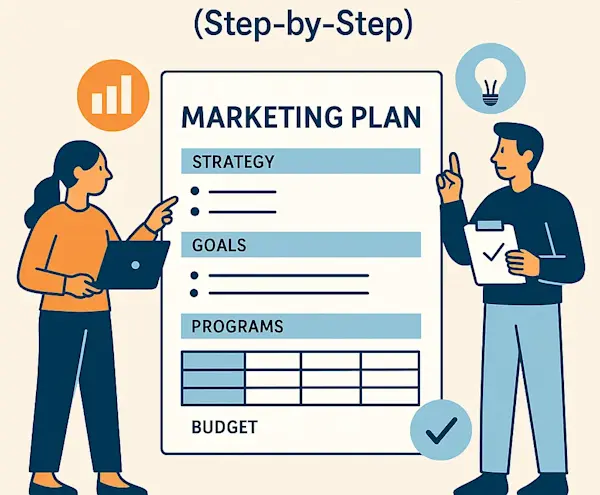
Most marketers have a marketing plan template somewhere. Few use it effectively. A template is only useful if it helps you connect strategy to execution and turn ideas into measurable outcomes. Used the right way, it becomes more than a document—it becomes a system for planning, alignment, and accountability.
Step 1: Start with Strategy, Not Tactics
Before you fill in any boxes or columns, define your strategy. A good plan template starts with clear choices. What markets will you serve? Which segments matter most? What is your position in those markets? Strategy gives context to every action that follows. Without it, a plan becomes a disconnected list of activities.
Step 2: Translate Strategy into Measurable Goals
Once the direction is set, define the outcomes you want. These should be measurable, time-bound, and tied to business results. For example, instead of “increase awareness,” aim for “grow brand consideration among mid-market manufacturers by 15% in 12 months.” This gives your plan a clear target that can later be tracked.
Step 3: Organize Activities into Programs
Programs are the link between strategy and execution. Each program supports a specific goal and contains a set of tactics designed to achieve it. For example, a product launch program might include digital campaigns, webinars, and PR outreach. Grouping tactics into marketing programs or campaigns keeps the plan organized and makes reporting more meaningful.
Step 4: Allocate Budget and Resources
Templates often include a column for budget, but few marketers use it to manage resources dynamically. Use your template to map not just spend, but people and time. Ask whether the investment matches the importance of the goal. If 40% of your growth target depends on one program, it deserves 40% of your budget and attention.
Step 5: Define Key Metrics for Tracking
Every program needs a way to measure success. Go beyond vanity metrics like impressions or clicks. Tie metrics to business outcomes. For example, lead-to-opportunity conversion, average deal size, or contribution to pipeline. Your template should make it easy to capture these consistently and review them over time.
Step 6: Review and Update Regularly
A marketing plan isn’t static. Use your template as a live document. Review it monthly or quarterly. Track what worked, what didn’t, and why. Adjust programs, budgets, or timelines based on evidence, not opinion. The best templates support iteration, helping you make smarter decisions with each cycle.
Step 7: Present the Plan Clearly
The value of a plan is not only in its creation but in how it’s communicated. A well-structured plan should be easy to present to executives, sales teams, or partners. Focus on clarity—show the link from strategy to goals to actions to results. Avoid cluttered spreadsheets and slide decks that obscure the story.
Making Your Template Work for You
A marketing plan template is a framework, not a form to fill in. Its real purpose is to help you think and plan systematically. The more consistently you use it, the more your marketing organization learns from its own data. Over time, it becomes a cycle of continuous improvement—plan, execute, measure, refine, and repeat.
If your current plan lives in spreadsheets or PowerPoint slides, consider a purpose-built tool like B2B Planr. It was designed for marketers who want structure without complexity, linking strategy, budgets, and results in one place.